



In 2022, the Central American Dry Corridor (CADC) restoration initiative was recognized as a World Restoration Flagship under the United Nations Decade on Ecosystem Restoration 2021–2030 (hereafter, the “UN Decade”). The initiative aims to support the recovery and improvement of productive ecosystems with the aim of strengthening the resilience of land and communities in the CADC and the Dry Arc of Panama, in the region of the Central American Integration System (SICA, in Spanish). The initiative operates under the political leadership of the Central American Commission on Environment and Development and the Central American Agricultural Council, with FAO providing technical coordination, and the International Union for Conservation of Nature (IUCN) and the United Nations Environment Programme (UNEP) as implementing partners. The initiative is supported financially by the UN Decade Multipartner Trust Fund with contributions from Germany and Denmark, and carries out activities on three levels: the regional level across seven SICA countries, the national level in three pilot countries – Guatemala, El Salvador and Honduras – and the subnational level in priority areas in the three pilot countries. The CADC flagship focuses on promoting and scaling up restoration; it also contributes to placing restoration on national development agendas by focusing on the five following dimensions.
Strengthening policy, governance, and regional coordination
Ongoing work focuses on strengthening national and regional multistakeholder platforms, advancing regulatory and policy reforms, integrating restoration with the Agriculture, Forestry and Other Land Use 2040 Regional Initiative and nationally determined contribution (NDC) processes, and strengthening coordination mechanisms to remove systemic barriers to restoration across the CADC. Key achievements include facilitation of dialogue and intersectoral coordination to promote ecosystem restoration as a joint agenda between the environmental and agricultural sectors in SICA countries. In El Salvador, technical support was provided to the platform that coordinates and monitors the joint environmental and agricultural agenda (AFOLU National Technical Commission, COTENA in Spanish), and a course on restoration and climate change was delivered to develop and strengthen the knowledge of 96 government officials from both sectors, environment and agriculture.
Enhancing restoration finance and investment planning
Activities include mapping of financial institutions, products and incentives for restoration, and developing restoration investment plans for each of the three pilot countries. In addition, dialogues between the public and private sectors, financial institutions, donors and producers are being convened.
Advancing knowledge sharing, capacity building and communication
Efforts are under way to systematize and disseminate good practices in landscape restoration and enabling conditions through the UN Decade Framework for Ecosystem Restoration Monitoring (FERM), including documenting the practice Interinstitutional development and implementation of the National Programme for the Restoration of Ecosystems and Productive Landscapes in El Salvador. Additional activities are focused on consolidating a community of practice online, and implementing a communication and visibility strategy to disseminate evidence‑based communication materials on restoration benefits at the regional level.
Technical support in pilot countries and scalable production models
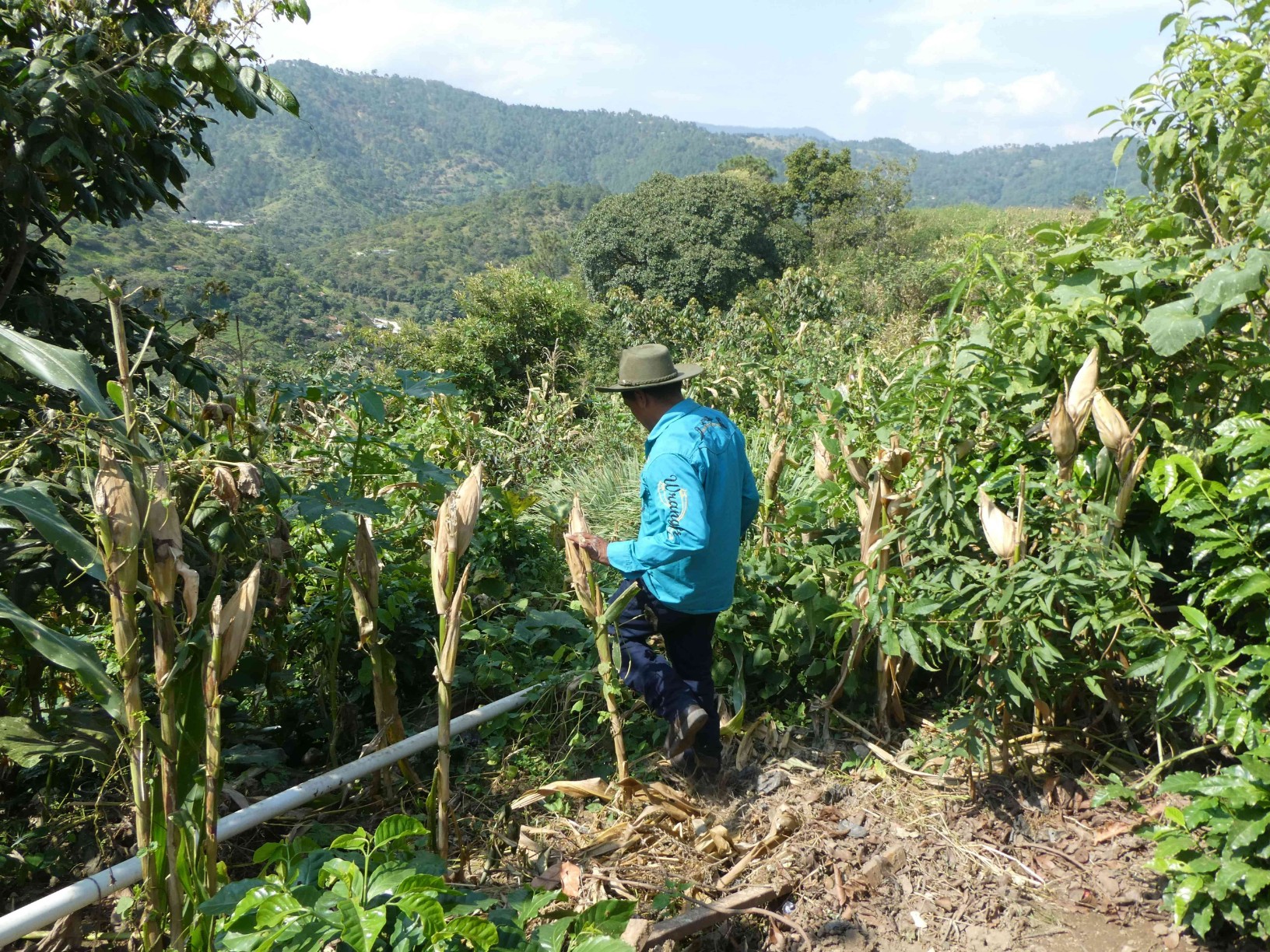
The initiative supports the implementation and monitoring of restoration interventions on selected farms in the pilot countries, including delivering trainings (field schools), organizing exchanges for farmers and extensionists, developing didactic material on restoration interventions for producers and landowners, and expanding restoration‑linked business models for coffee, mangrove and silvopastoral systems.
Strengthening monitoring, reporting and data interoperability
Actions include improving national data-management and information platforms, supporting integration of restoration results into the reports on NDCs, Kunming-Montreal Global Biodiversity Framework Target 2, and land degradation neutrality (LDN) targets, and building long‑term national capacity for FERM‑aligned monitoring and reporting.
A diagnosis of national monitoring systems, information platforms and data-collection tools in the region was conducted. An Application Programming Interface (API) has been developed for interoperability between national monitoring platforms and FERM. To date, Guatemala, Honduras and Panama have been supported to operationalize the integration of their platforms with FERM. In addition, the Integrated Information Management System (SIGI in Spanish) is being developed and customized to compile and manage information to strengthen national restoration monitoring systems, as well as to support the preparation of a regional report on restoration progress in the CADC. The SIGI is expected to be implemented in Costa Rica, El Salvador, Guatemala, Honduras and Panama.