

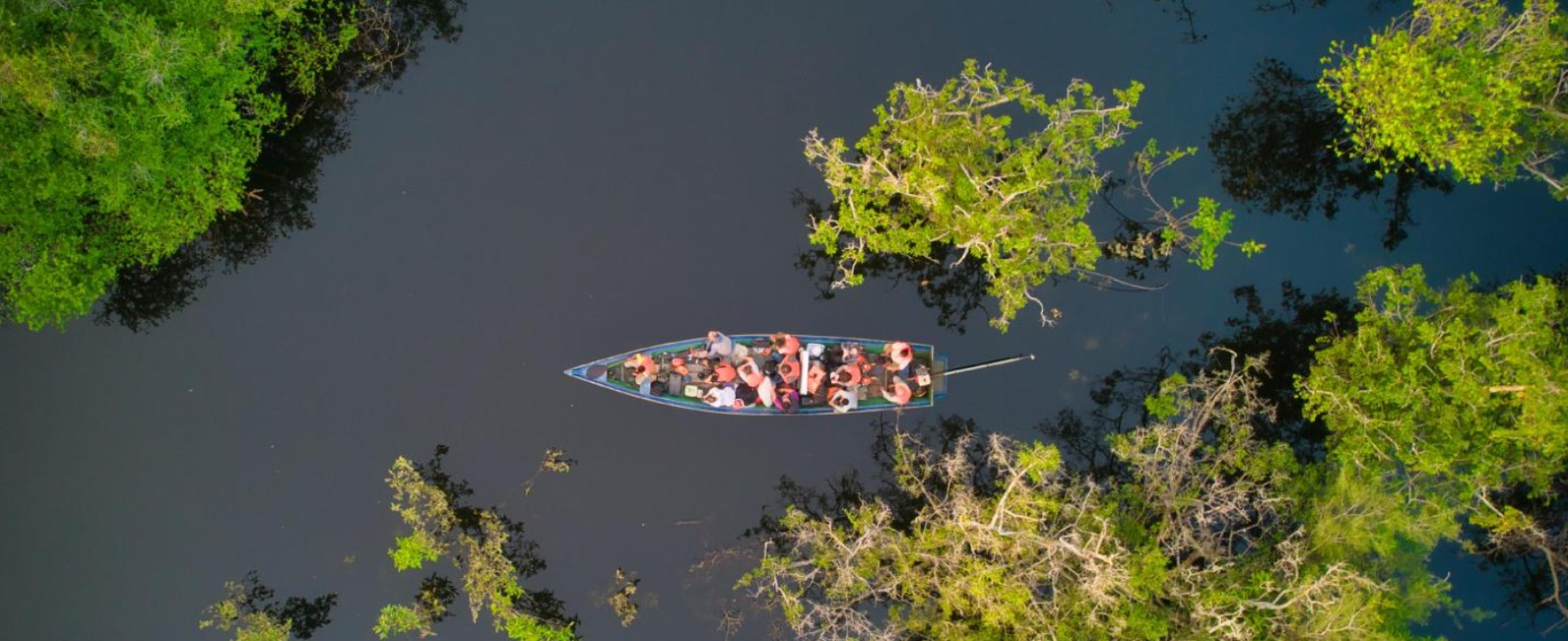


In the heart of the Brazilian rainforest the Agroextractivist Association of Communities of the Uatumã Sustainable Development Reserve is caring for the ecosystem for the benefit of future generations. You can read the full story here.
Members of the Agroextractivist Association of Communities of the Uatumã Sustainable Development Reserve belong to the 360 families living in what is now the Uatumã Reserve. Founded by the state government in 2004, it covers 424,000 hectares distributed between the municipalities of São Sebastião do Uatumã and Itapiranga, specifically in the Uatumã and Jatapuen river basins, in the lower region of the Brazilian state of Amazonas, and is administered by the State Secretariat for the Environment (SEMA).
The reserve is about 330 kilometres from the city of Manaus. From there, it is a four-hour drive to the municipality of Itapiranga. Then, it is another three hours by boat to the first riverside communities.
Many of these families migrated to this area in the 1970s and 1980s to work on the construction of the Balbina hydroelectric dam. They then began to exploit the available natural resources for their livelihoods, alongside fishing and agriculture.
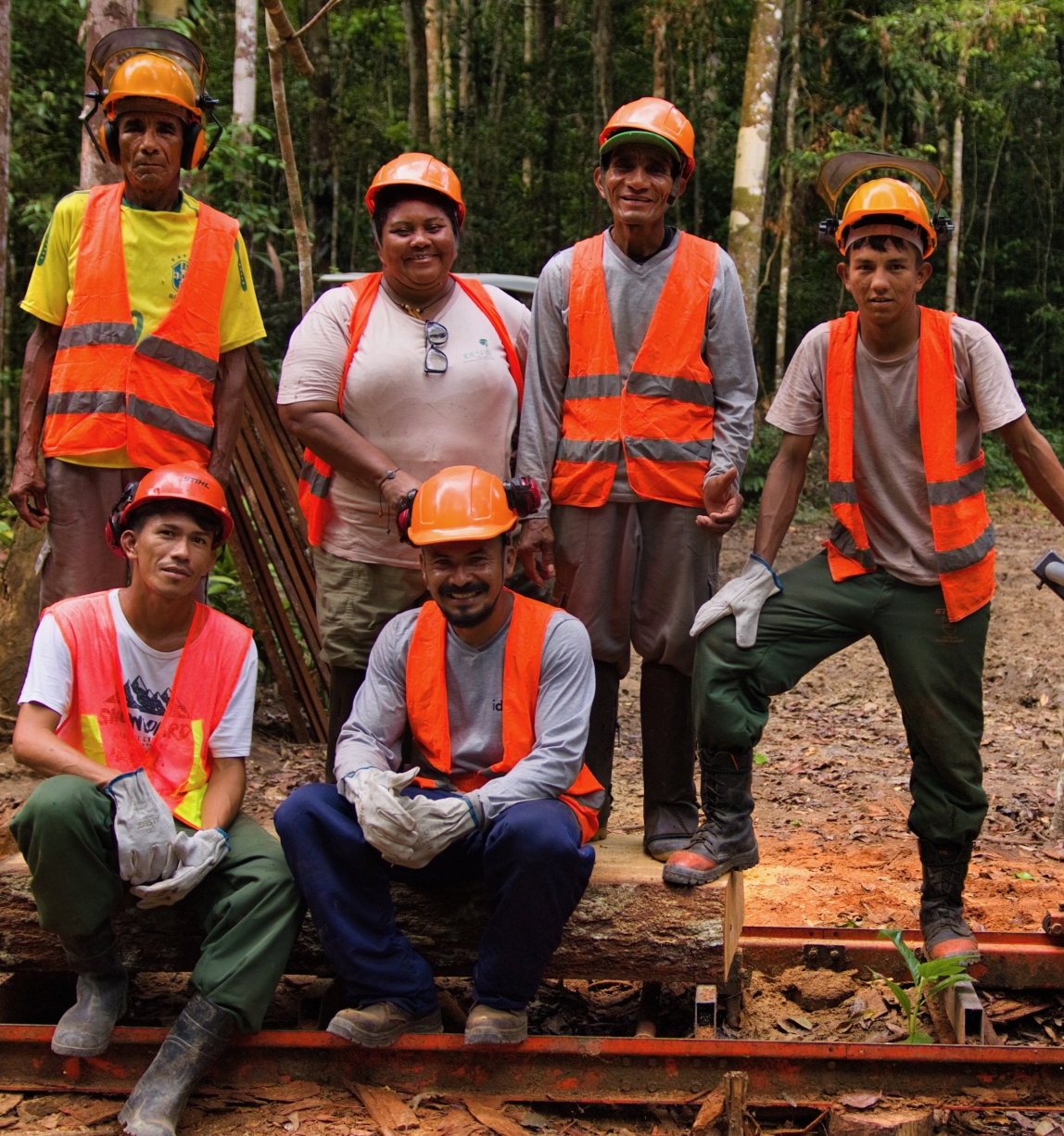
"My parents lived and worked here when it wasn't yet a reserve. They used to freely harvest wood from various species such as rosewood. I grew up with the goal of not doing the same," says Elisangela Conceição Cavalcante, who is part of the Association's Timber Forest Management Plan Working Group, which cares for 42,000 hectares of FSC-certified forest.
Essential oils
The Agroextractive Association of Communities of the Uatumã Sustainable Development Reserve is the only one in the entire Amazon whose FSC certificate includes timber and non-timber products such as resins and natural oils. Among the best known are colophony resin (breu) and copaiba oil, crucial inputs for the manufacturing of perfumes, cosmetics, skin care products, healing products, soaps, and scented candles, among other products.
Breu is obtained from a species of tree belonging to the Protium spp family, which can reach heights of up to 25 metres. The resin can be found naturally accumulated in some external areas of the trunk, like stones that, when dry, appear to come from the moon due to their dark grey and somewhat porous appearance.
"We remove the resin that is stuck to the bark of the tree. Sometimes quite a lot of resin has accumulated. We collect it and then put it in sacks to transport it to the processing plant. There we sort it and clean it before starting to distil it. The process takes eight hours and yields 2.5 litres of resin per day," says Vanderlei Soares.
In the past, breu was not a valued product on the market and was mainly used to waterproof river boats. Now the reality is very different thanks to FSC certification.
The plant also processes copaiba oil (Copaifera spp.), which is extracted by drilling a hole in the tree trunk with a suitable drill or auger, always in the lower part, below the branches. After a few minutes, a golden substance begins to flow slowly and is collected in containers. "I learned how to collect it when I was seven years old, but in the past, drilling was done with chainsaws due to a lack of technical training and financial resources," says Vanderlei.
After collection, the copaiba oil undergoes a week-long decanting process in 500-litre storage tanks to separate impurities. It is then filtered through cloth and packaged in 50-litre drums that are sent to Manaus. "I am very proud to live here in the forest, just like my father and grandfather did. We are part of an important chain called Inatú Amazonia. Through our daily work, we keep our traditions alive and take care of nature", said Vanderlei Soares.
Inatú Amazonia is a union of traditional communities in the region that, with their knowledge, dedication, and care, develop sustainable products that reach global markets. Born in the heart of the forest, the peoples of the Amazon created this collective brand as a solution to promote environmental conservation and improve their quality of life through powerful Amazonian oils and wooden pieces.
A dream come true
Fifteen years ago, community members longed for a sustainable forest management plan and an oil and resin processing plant but saw this as almost unattainable. "I dreamed of a legal forestry sector. It eluded us on several occasions, but we didn't give up. The only way to achieve it was by working together," recalls Gracilazo Rodríguez, a member of the Association.
At first, not everyone was sure they wanted to participate. It was difficult for some to understand that there was a sustainable way to use the forest's natural resources, something very different from what had happened decades ago. They did not want to repeat the deforestation that the area had undergone before becoming a reserve.
It was a long process that tested the community's persistence and willpower. Little by little, doors began to open thanks to people who believed in the community and provided training. "Technicians visited us, we took inventory and discovered that there was a lot of potential. We processed the necessary permits and that's how we started this association," added Gracilazo.
Idesam is a Brazilian organization that works closely with socio-environmental development projects and sustainable value chains in the Amazon. They accompanied the community throughout this process, providing technical training, licences, physical structuring, and helping them to increase the value of their products. They then encouraged them to obtain FSC certification.
"For us, responsible forest management is a conservation tool. We recognise that sustainable use can guarantee its long-term survival. That is why we work with communities to develop value chains," says André Vianna, technical director of Idesam.
"From the beginning, Idesam supported us with the management plan, training and technical guidance. When I enter the forest, I do so with respect. What we do today with our work is conserve. Today we have FSC certification because we are on the right track," adds Elisangela.
Sustainable harvesting
Gracilazo is one of the leaders of the teams that go out each day. Despite being 53 years old, he is more active than the younger members. To reach the forest management unit, community members travel between one and two hours by boat along the river. Once there, they enter the forest at temperatures of over 36°C, guided by GPS coordinates. The trees to be harvested are properly identified both on the map and in situ. "We go to the trees that we have already identified according to the species requested. When we arrive, we check to see if any other trees around them could be damaged during harvesting, or if, for example, there is a macaw nest that was not there when the inventory was made. If so, we leave it as it is and look for another one on the map," added Gracilazo. After harvesting, the logs are taken to a collection area, where they are cleaned and turned into FSC-certified planks. Some will be sold as is, while others will undergo further moulding and finishing in the community workshop to become final products.
"Through the workshop, we give the wood an identity. Each piece is a little bit of us that was left in the forest and is now in the hands of someone outside Brazil. This helps us to remain in our communities and take care of nature," says Elisangela emotionally.
The value of certification
In 2018, Idesam proposed that the Association obtain FSC certification. Through them, other institutions joined in, such as the Amazon Fund of the Brazilian National Bank for Economic and Social Development (BNDES), to finance the management plan project, the oil plant and start the certification process. Imaflora was also a technical partner during the process until it was completed in 2022.
"It was the icing on the cake to give a better value to the work of the communities. FSC is a strong name in the market, it is credible and a great reference worldwide. The communities are proud that consumers, through traceability, can know which forest the products they buy today come from"
Marcus Biazatti, Sustainable Production Leader at Idesam.
As for essential oils, breu used to sell for R$1 per kilo. After building the production plant and obtaining FSC certification, we now sell a kilo of resin for R$8, an 800% increase because it has all the control and origin records. The same happened with copaiba, which used to sell for R$45 per kilo and is now worth R$75.
"Who doesn't want to work, and what company doesn't want to buy certified wood? Through FSC, they know where it comes from and who is here using the forest sustainably. We used to sell our wood at a very low price. Today, we have contracts that give us greater security and better profits."
Gracilazo Rodríguez
According to Idesam, the improvement in the quality of life of the inhabitants thanks to the marketing of sustainable products with the FSC label has been remarkable. Thanks to certification, communities now have showers, adequate bathrooms, running water, and internet access. "Before certification, our community already cared for the forest, but the label helps show this to consumers, adds value and gives credibility to our products," said Elisangela.
Looking to the future
In the context of the upcoming Conference of the Parties (COP 30) to the United Nations Framework Convention on Climate Change to be held in Brazil, it is important to highlight the vital role that communities play in caring for ecosystems and mitigating deforestation, biodiversity loss, and climate change.The community in the Uatumã Reserve has a strong relationship with the forest, rivers and animals that inhabit it. Nature is their home, and they feel responsible for it. "We have to take care of the forest and preserve it so that future generations can also enjoy it. Today we have it, but tomorrow it may be gone," says Elisangela.
"They are the forest's greatest protectors and provide a great service to the planet, not only by maintaining forest cover, but also by mitigating the greenhouse effect," says André Vianna, technical director of Idesam.
The story of the Uatumã Reserve is an inspiration to other communities around the world. It is a successful example of how development and conservation can coexist and strengthen each other when communities are the protagonists, contributing their traditional knowledge, collective work, and trust in a sustainable future.